Plum Island -
Reckoning with Public Land
Genre: Documentary
Running Time: 88 min
Director/Producer: Thomas Halaczinsky
Format: 4K
Language: English
Synopsis – Short A secret island. An animal disease lab. A political ploy. After 70 years of being off-limits for security reasons, nature has reconquered most of Plum Island. Suddenly, the government wants to sell it to the highest bidder. Who fights back, and why? Plum Island – A Reckoning with Public Land shows what happens when a major victory turns out to be a start-from-here point in disguise. Synopsis Long Imagine you live next to an island, but you can’t visit. Plum Island has been off-limits for 70 years, shielded by the ocean and armed guards. A political move is designed to push the island out of reach for good, but it meets local resistance. Meanwhile, one of the region’s Native tribes fights for recognition. Who inherits the land, who controls the truth, and who decides the destiny of our last wild places? These are the questions filmmaker Thomas Halaczinsky delves into with his 90-minute documentary Plum Island – A Reckoning with Public Land. Over the course of eight years, the film follows activists and politicians in a tug-of-war. The focus is on two women: biologist Louise Harrison and Sandi Brewster-walker, the executive director of the Montaukett Indian Nation. Their motives? A deep love of nature. The need to right a centuries-old wrong. Their common goal: Keeping Plum Island out of private hands. Soon enough, the women discover that a major victory really is a start-from-here point in disguise. A historical fort is crumbling away on Plum Island. Nature has taken over, hiding ancient graves. Seals cavort around rocks, a Spring Ladies’ Tresses orchid nods in the breeze, piping plover chicks zip along the beach like fluffy golf balls on stilts. Humans are present, too. A fraction of this island the size of Central Park is occupied by the Plum Island Animal Disease Center. Its mission: Protect the U.S. meat supply. Scientists at the lab study diseases that can wipe out herds of cattle or pigs, but don’t infect humans. And yet, off the island, rumors cause a stir. A real threat looms in an unexpected place: a budget bill on Capitol Hill. With two sentences hidden in a tome of legislation, Congress determines that the lab will move to Kansas. To offset the cost, Plum Island is to be sold to the highest bidder. Environmental activists are the first to take notice. They mobilize local resistance with the specter of pristine nature turned into a golf resort. But what should become of the island instead? Set against the backdrop of saving public land, Plum Island is a cinematic reckoning with America’s unresolved contradictions: ideals and profits, science and suspicion, forward-thinking and nostalgia, dispossession and belonging.


Click to download images in 72 dpi or 300 dpi
Filmmaker's Statement

I first came across Plum Island quite literally, on a sailboat. I had no idea I had just signed up for an eight-year-long journey. Little did I know that such a maritime location would bring me to land ownership and its crucial role in the United States of America. As an immigrant, I have explored my relationship to where I live throughout the last 35 years. Early on, I recognized that colonialists were my European peers. Thus, I have been questioning American culture’s echoes of their Doctrine of Discovery – “I discovered this land, it’s mine, no matter who lives there”. When I was working on stories about islands in New York around 2017, Plum Island stood out. I felt its secrecy, learned that the island is not accessible – and that it was about to be sold to the highest bidder. I initially did some pro bono work to help local groups get this information to the public, saying the island is owned by the federal government. It took me about a year to think about what that actually means. The government only owns property on behalf of the people. In theory, the people guide the government by voicing their wishes for that property. But how does that work in practice? I stopped helping with awareness campaigns and set out to make a documentary that would help people understand the situation, rather than influence their opinions. When we filmed the first Envision Plum Island conference, there were representatives of the Indian Nations, the Shinnecock, the Montaukett, at one table. They were treated like any other group. I found that strange. Like sitting with my neighbors who discuss painting my house red or green, not even mentioning that it’s my house. In that moment I realized: I cannot tell this story without telling their story. Because this is their story. With Plum Island – A Reckoning with Public Land, I didn’t know what the story’s outcome would be. Rather than filling a pre-defined story arc with a beginning, a middle and an end, things were open. And that’s probably the best thing that can happen to a documentary filmmaker: Everything is a surprise.


The Team
Field Producer & Interviews - Petrina Engelke is a journalist who worked with Thomas as a producer for the Archipelago New York (2021) series and made the short film “New York Farm City” (2011) about rooftop farms in NYC with Raul Mandru. Being a writer first, Petrina has published foout the US in Germany. Petrina is a permanent resident of the United States and a German citizen. She lives in Greenport, NY.
Editor - Michael Craft is an award-winning Australian documentary editor whose work spans top New York production houses including Jigsaw, Doc Group, The Othrs, Film 45, Left/Right, Saboteur Media, and Moxie Pictures. He was an editor on Nick Quested’s Emmy-nominated 64 Days and contributed to acclaimed films such as The First Class (DOC NYC) and Gloria Gaynor: I Will Survive (Tribeca). In 2024 he edited a slate of videos for the American Issues Initiative, exploring Gen Z perspectives on climate, gun violence, reproductive rights, and more. A Columbia University graduate with extensive university teaching experience in Australia, he brings both craft and storytelling insight to every project.
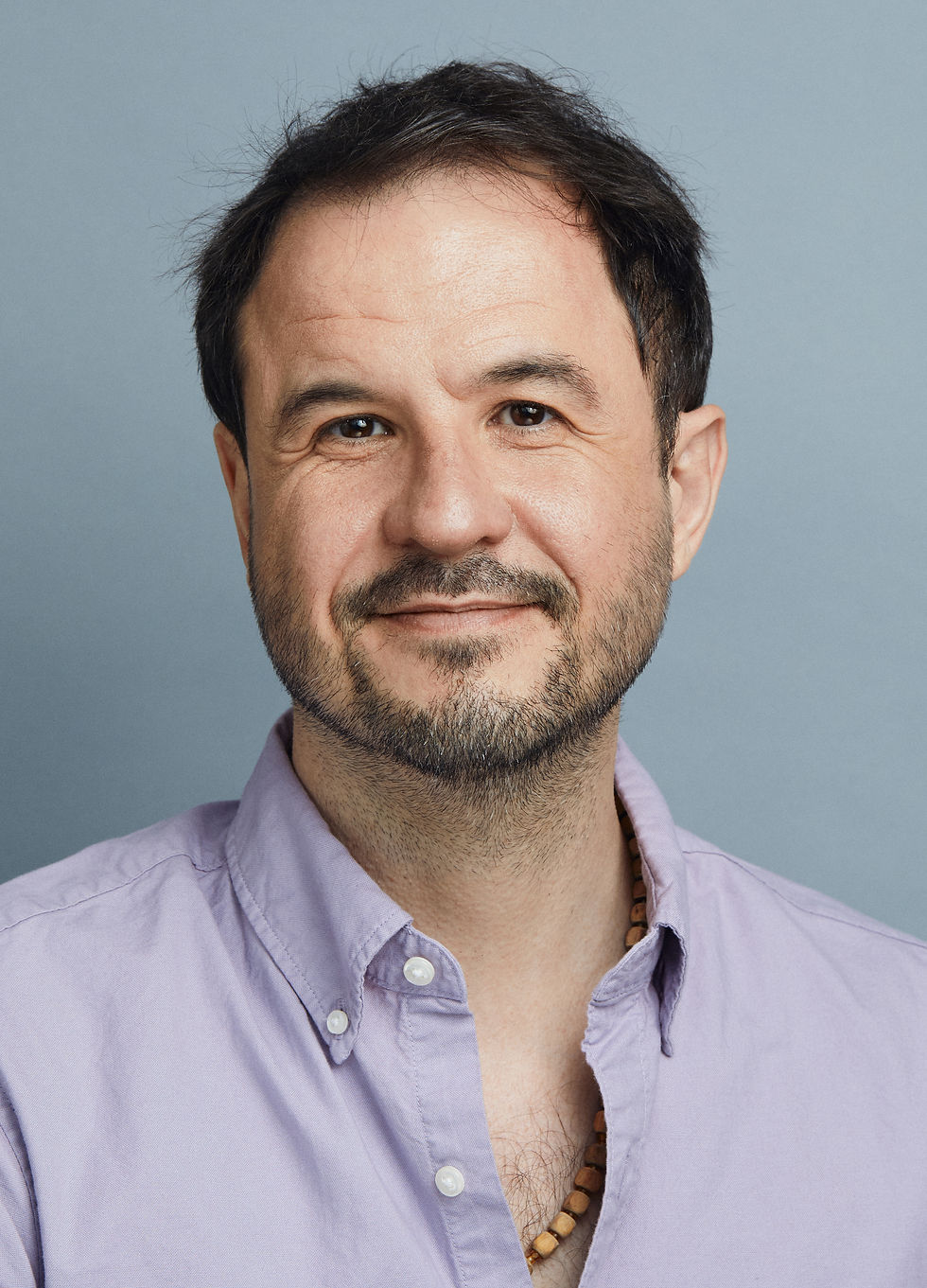
Director/Producer - Thomas Halaczinsky is a German-American documentary director based in Greenport, Long Island. Between 2020 and 2022 he produced and directed a three-part documentary series Archipelago New York, for the European network ARTE and national German broadcaster ZDF. The series focuses on how nature negotiates and sustains its existence in the New York metropolis. It was an official selection of the 2022 International Ocean Film Festival in San Francisco; won an Excellence Award at the Nature Without Borders Film Festival, and was awarded Best Science Film at the International Blue Water Film Festival. Between 2003 and 2023, Thomas produced and directed three documentaries that followed Holocaust survivor Margot Friedländer as she revisited her life story beginning at age 83: Don’t call it Heimweh (2004); Late Return (2011); and Arrived - Margot Friedländer, Berlin. Don’t call it Heimweh was selected as the opening film at the 2005 International Jewish Film Festival in Berlin. In 1996, Halaczinsky won an ACE award for his contribution to the EMMY Award-winning film Calling the Ghost. Photo: Jeremy Garettson